(Unattributed)
1990s Leather Blazer, Patch Pockets, Notched Lapels
1990s Leather Blazer, Patch Pockets, Notched Lapels
Couldn't load pickup availability
Approximate Size: EU 40–42, US L
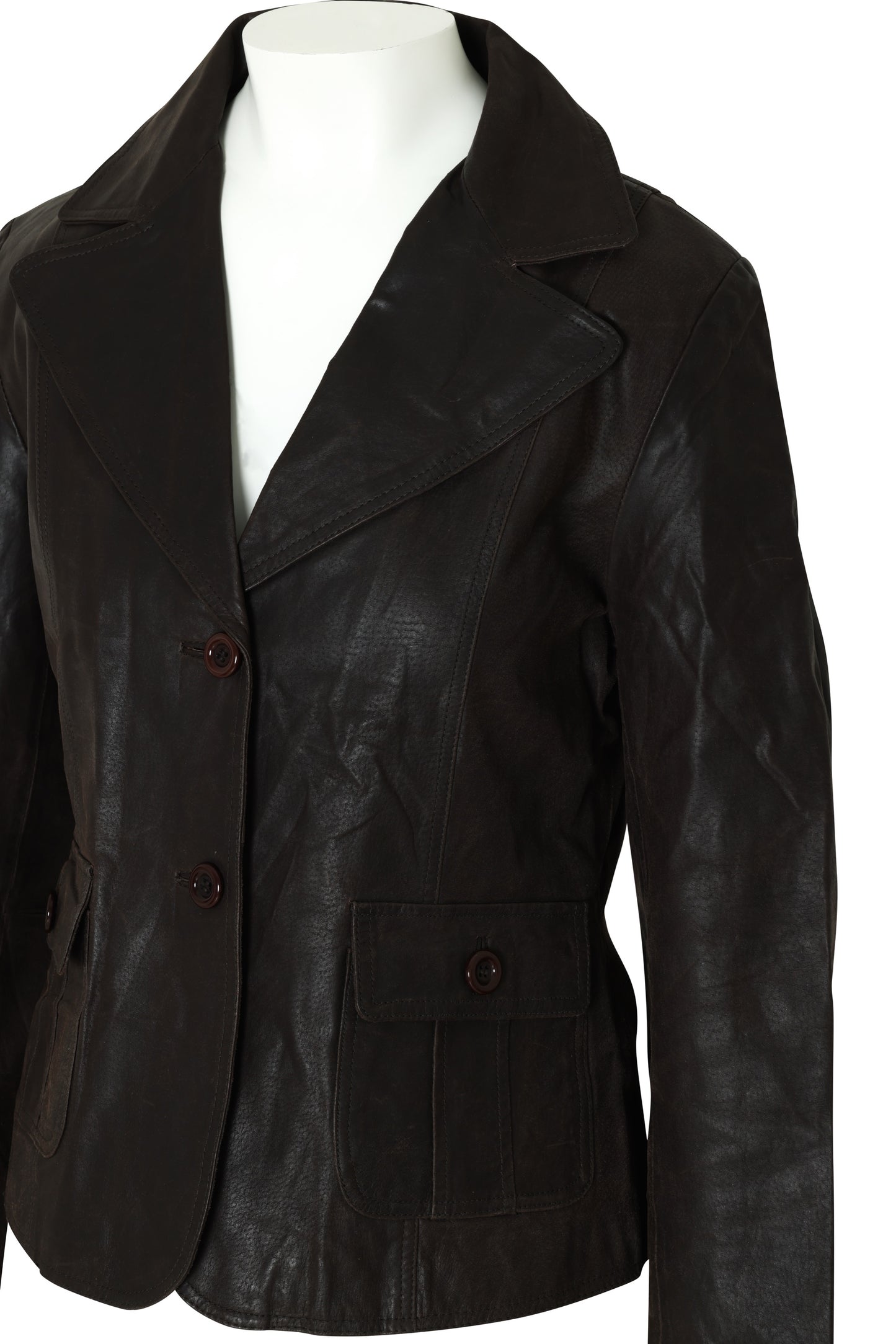
This is a leather blazer-form jacket produced approximately between the late 1980s and mid-1990s, identifiable through its tailored silhouette, button closure, and industrial construction methods. The exterior is composed of dark brown finished leather, paired with a synthetic polyester lining. The garment is factory manufactured, using panel-based shaping to approximate tailored structure without traditional tailoring infrastructure. Its significance lies in its translation of blazer conventions into leather, a common late 20th century adaptation that merged casual material with formal pattern language. The piece reflects a commercial category designed for versatility across daywear contexts rather than specialized use.
I. Primary Materials, Textile Structure & Fabric Performance
The outer material is genuine leather, likely corrected or semi-pigmented hide, finished in a deep brown tone with moderate surface sheen. The grain is visible but controlled, indicating surface treatment for consistency and durability. The leather weight is medium, providing enough body to support a blazer-like silhouette while remaining flexible. The lining is presumed polyester based on category consistency, functioning primarily as a covering layer to protect seam interiors and facilitate wear. The leather retains elasticity and shows no evidence of brittleness, with surface creasing consistent with storage rather than repeated stress. No internal canvas, haircloth, or traditional tailoring support structures are evident.
II. Construction Method, Pattern Development & Production
The garment is machine constructed using industrial methods. Panel seams are used to shape the torso, replacing traditional darting systems and allowing for controlled contour through repetition. Stitching is consistent and uniform, with no visible irregularities in tension or spacing. The pattern is flat-cut and standardized, indicating batch production rather than individualized tailoring. Patch pockets with flap closures are applied symmetrically, with button attachments executed by machine. Interior seam finishing is concealed beneath the lining, likely overlocked prior to assembly. There is no evidence of later alteration; all seam lines appear original.
III. Structural Design, Silhouette Engineering & Technical Resolution
The jacket adopts a blazer-derived structure, with notched lapels, a front button closure, and a lightly shaped waist. The silhouette is moderately fitted, achieved through vertical paneling rather than internal structuring. The lapels are cut directly from the leather body panels, with minimal internal reinforcement, resulting in a softer roll than traditional tailoring. The front closure consists of multiple buttons, distributing tension across the center front. Patch pockets with flaps are integrated into the lower front panels, contributing both function and visual weight. Sleeve construction is set-in and relatively narrow, maintaining alignment with the fitted torso.
IV. Surface Treatment, Finish, Coloration & Material Handling
The leather is uniformly dyed in a dark brown tone, with a slightly reflective finish indicating a protective topcoat. The surface shows mild creasing and subtle variations in reflectivity, consistent with storage compression rather than active wear. No significant abrasions, discoloration, or finish loss are visible. The edges of the leather panels appear cleanly finished, with no evidence of repainting or repair. The overall surface condition suggests stable preservation, with no indication of excessive handling or environmental damage.
V. Garment Type, Formal Design Language & Fashion Historical Placement
This garment occupies the category of leather blazer, a form that emerged prominently in the late 20th century as leather was adapted into silhouettes traditionally associated with woven tailoring. The notched lapel, button front, and pocket configuration reference conventional blazer structure, while the material shifts the garment into a more casual domain. The silhouette aligns with late 1980s and 1990s preferences for fitted yet wearable outerwear, particularly in women’s fashion where tailored forms were reinterpreted through alternative materials. The piece reflects a period where leather was normalized within everyday wardrobes rather than restricted to specialized garments.
VI. Designer, Brand, Manufacturing Context & Market Position
No designer or brand is identified. The construction and materials indicate mid-tier industrial production, likely executed under contract for retail distribution. The garment sits within a commercial category designed to emulate tailored aesthetics without the cost of traditional tailoring methods. It would have been positioned within department stores or specialty retailers, targeting consumers seeking the visual authority of leather combined with familiar blazer forms. The absence of branding suggests either label removal or production for a retailer that did not emphasize designer identity.
VII. Probable Origin, Provenance Framework & Attribution Threshold
Without visible labels, attribution is limited to general production context. Based on construction methods, material treatment, and stylistic alignment, the garment likely originates from European or broadly international manufacturing networks serving Western retail markets. No internal markings or identifiers provide further specificity. Attribution remains at the level of industrial production system rather than individual manufacturer or atelier.
VIII. Preservation Indicators
The garment presents with signs of limited wear or careful storage. Surface creasing is present but shallow, lacking the pronounced stress patterns associated with repeated use. Pocket flaps and button attachments show no visible strain or distortion. The leather maintains consistent finish across exposed areas, with no fading or edge wear. These indicators suggest either minimal use or storage as unsold or lightly handled inventory rather than a garment subjected to extended wear cycles.
IX. Market Standing, Comparative Category Placement & Value Estimation
Estimated current market range: $100–220. The valuation reflects genuine leather construction, tailored silhouette, and stable condition, balanced against the absence of designer attribution. Comparable leather blazers from the same production tier occupy a moderately saturated segment of the vintage market. The garment’s appeal lies in its adaptability and material rather than rarity or historical distinction. Liquidity is moderate within general vintage resale contexts, with limited relevance to specialist or institutional acquisition.
X. Wear Guidance, Styling Framework & Contextual Use
The jacket should be worn in a manner consistent with its blazer-derived proportions, paired with garments that maintain a structured vertical line, such as tailored trousers or straight skirts. Lightweight layering beneath is recommended to preserve the intended fit and prevent seam strain. The lapels should be allowed to sit naturally without forced shaping, respecting the absence of internal tailoring support. Button closure should be engaged with care to avoid tension at the center front. Conditioning of the leather prior to regular use will support flexibility and longevity. The garment is suitable for regular wear within controlled conditions, provided its structural limits are observed.
Share